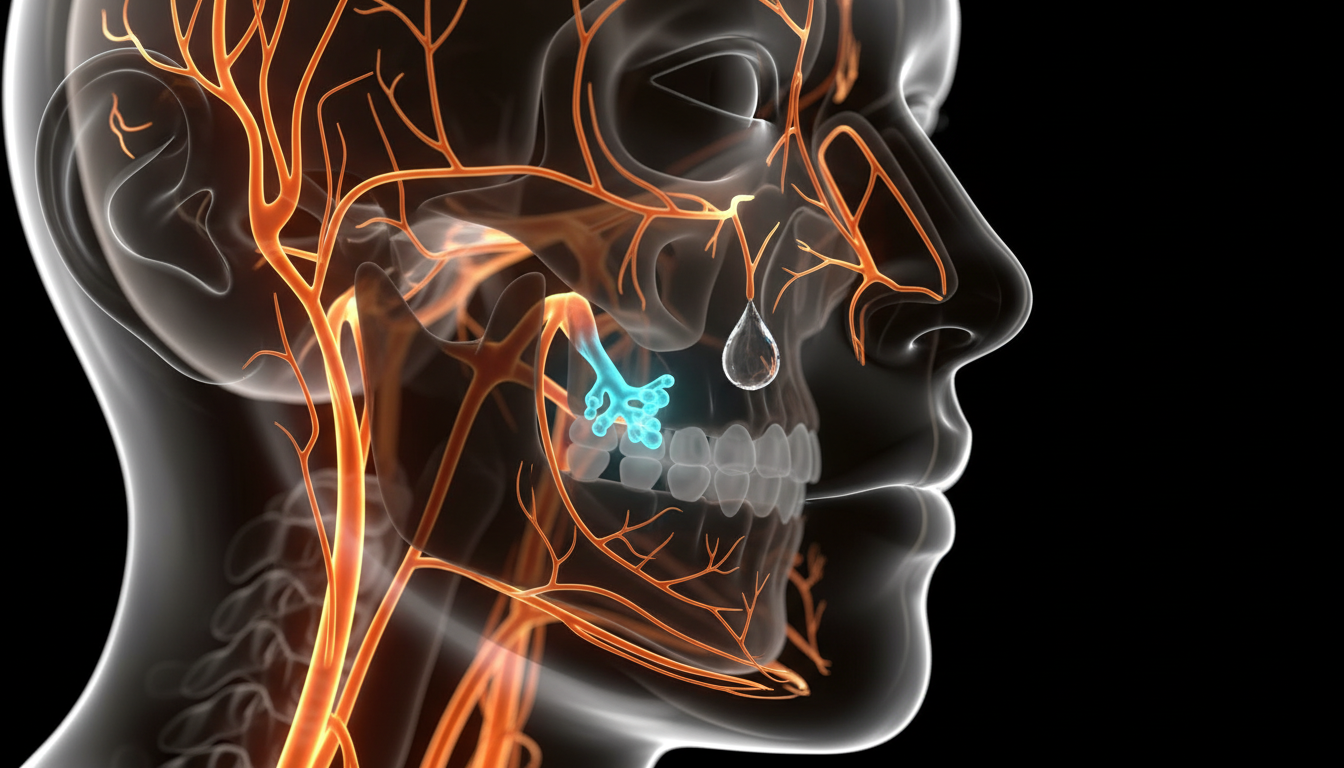
- Researchers investigated whether larger doses of bupivacaine for sphenopalatine ganglion blocks provide better sustained headache relief in the emergency department.
- This unblinded, randomized trial assigned 220 patients to receive unilateral or bilateral blocks using either 1 mL or 3 mL of 0.5% bupivacaine.
- Compared to 1 mL unilateral doses, higher 3 mL bilateral doses did not significantly improve sustained relief (13% difference, 95% confidence interval -4% to 29%).
- The researchers concluded that administering larger volumes of bupivacaine does not yield greater sustained headache relief than using smaller volumes.
- Clinicians treating acute headaches can utilize lower bupivacaine doses for this block, achieving similar efficacy with minor adverse events in under 10% of patients.
Optimizing Noninvasive Nerve Blocks for Acute Headache Management
Acute, severe headaches are a frequent and challenging presentation in the emergency department, often requiring aggressive multimodal treatment [1]. In recent years, the transnasal sphenopalatine ganglion block (a technique delivering local anesthetic to a major facial nerve cluster linked to trigeminal pain pathways) has emerged as a promising, minimally invasive alternative to systemic medications for both primary headaches and post-dural puncture headaches [2, 3, 4]. By interrupting pain signals directly at the ganglion, clinicians can often achieve rapid analgesia while avoiding the side effects of opioids or the need for invasive epidural blood patches [5, 4]. Despite the growing popularity of this bedside procedure, standardized dosing protocols remain poorly defined, leaving physicians to guess whether larger volumes of anesthetic yield better results [4]. A new randomized clinical trial now offers fresh insights into the optimal dosing strategy for achieving sustained headache relief in the acute care setting [6].
Trial Design and the Nasal Delivery Hurdle
To determine if larger doses of bupivacaine result in greater rates of sustained headache relief than lower doses when performing a sphenopalatine ganglion block for emergency department patients, researchers designed an open-label, four-arm randomized trial across two sites. The study enrolled patients presenting with moderate or severe primary or secondary headaches. Investigators randomized these patients to receive either a unilateral or bilateral transnasal sphenopalatine ganglion block using 0.5% bupivacaine. Participants were further randomized to receive either a high dose (3 mL) or a low dose (1 mL) of the anesthetic. Depending on the assigned combination, patients received total bupivacaine volumes of 1 mL, 2 mL, 3 mL, or 6 mL. The trial did not utilize a sham procedure, and neither the patients nor the investigators were blinded to the treatment assignments. Patient recruitment quickly revealed a significant clinical hurdle regarding the acceptability of the transnasal approach. Although investigators screened 2,494 patients for eligibility, only 220 were ultimately randomized. A major factor driving this attrition was patient preference. Of the 2,494 screened patients, 1,612 (65%) refused participation because they preferred a non-nasal route of administration. This high refusal rate underscores a practical limitation for emergency physicians considering this intervention, as many patients in acute distress may be highly averse to nasal procedures despite their potential benefits.
Strict Criteria for Sustained Relief
To evaluate the efficacy of the nerve block, researchers assessed patient pain using standard clinical descriptors of severe, moderate, mild, or none. The study established a rigorous threshold for success, designating sustained headache relief as the primary outcome. Meeting this endpoint required rapid and durable analgesia, meaning patients had to achieve a headache intensity of mild or none within 2 hours of medication administration. Furthermore, they were required to maintain this reduced pain level for 48 hours after the procedure without using any rescue analgesic medications at any point during that window. This 48-hour timeframe is highly relevant for emergency clinicians, as preventing rebound headaches and return visits is a primary goal of acute pain management. Beyond immediate and lasting pain control, the investigators also evaluated patient satisfaction. The secondary outcome was defined as the patient's request to receive the same medication during a subsequent emergency department visit for a headache. To ensure the trial results would be meaningful for everyday clinical practice, the researchers set a predefined threshold for success. They established that the minimum clinically important between-group difference would be an absolute risk reduction of 15% to 20% (a statistical measure ensuring that any superiority of a higher dose would translate into a tangible, noticeable benefit for a significant portion of treated patients).
More Volume Does Not Equal More Analgesia
When evaluating the primary outcome of sustained headache relief, the researchers found that higher volumes of local anesthetic did not yield superior clinical results. The rate of sustained headache relief for the 1 mL bilateral group was 23/65 (35%), which was numerically the highest among the cohorts. This was closely followed by the 3 mL unilateral group at 15/44 (34%) and the 3 mL bilateral group at 17/54 (31%). The lowest response was observed in the low-dose, single-sided intervention, where the rate of sustained headache relief for the 1 mL unilateral group was 9/48 (19%). To determine if the higher volumes provided a statistically meaningful advantage, the investigators compared the larger doses against the 1 mL unilateral baseline. They found that compared to the 1 mL unilateral dose, the 3 mL bilateral dose did not result in significantly more sustained relief (95% CI for difference of 13%, -4% to 29%). Similarly, the 3 mL unilateral dose did not outperform the 1 mL unilateral dose (95% CI for difference of 15%, -2% to 33%). Because the confidence intervals crossed zero and failed to consistently exceed the predefined minimum clinically important difference, the higher volumes offered no reliable therapeutic edge. For emergency physicians managing acute pain, these findings suggest that pushing higher volumes of anesthetic into the nasal cavity is unnecessary. The study concluded that among emergency department patients with headache treated with a sphenopalatine ganglion block, larger doses of bupivacaine do not result in more sustained headache relief than smaller doses. Clinicians can therefore utilize lower volumes to achieve optimal analgesia while potentially minimizing patient discomfort and unnecessary anesthetic exposure.
Tolerability and Patient Acceptance
Despite the lack of superior efficacy with higher volumes, the sphenopalatine ganglion block proved to be a safe option across all dosing strategies. The researchers noted that the intervention was generally well tolerated, with minor procedure-related adverse events reported in ≤10% of participants in each arm. This low rate of complications should reassure emergency physicians that the transnasal approach, regardless of the specific volume of bupivacaine used, carries a minimal risk profile for acute headache management. Patient satisfaction, measured by the secondary outcome of requesting the same medication during a subsequent emergency department visit, remained consistent regardless of the dose administered. The rates of wishing to receive the treatment again were 35/53 (66%) for the 3 mL bilateral group, 26/44 (59%) for the 3 mL unilateral group, 36/62 (58%) for the 1 mL bilateral group, and 33/45 (73%) for the 1 mL unilateral group. The investigators confirmed that there were no statistically significant differences among the groups regarding the wish to receive the treatment again. For clinicians, this indicates that lower volumes of local anesthetic do not compromise patient acceptance, further supporting the use of a smaller dose to achieve effective, well-tolerated relief.
References
1. Alanazi M, Alotaibi M, Alotaibi S, et al. Management of acute severe headache in the Emergency Department. International Journal of Medicine in Developing Countries. 2024. doi:10.24911/ijmdc.51-1720772008
2. Schaffer JT, Hunter BR, Ball KM, Weaver CS. Noninvasive sphenopalatine ganglion block for acute headache in the emergency department: a randomized placebo-controlled trial.. Annals of emergency medicine. 2015. doi:10.1016/j.annemergmed.2014.12.012
3. Ho KWD, Przkora R, Kumar S. Sphenopalatine ganglion: block, radiofrequency ablation and neurostimulation - a systematic review.. The journal of headache and pain. 2017. doi:10.1186/s10194-017-0826-y
4. Mahanty PR, Sen B, Anand R, et al. Sphenopalatine ganglion block for postdural puncture headache: A review of current evidence.. World journal of clinical cases. 2026. doi:10.12998/wjcc.v14.i3.114521
5. Alatni RI, Alsamani RI, Alqefari A. Treatment and Prevention of Post-dural Puncture Headaches: A Systematic Review. Cureus. 2024. doi:10.7759/cureus.52330
6. McCarthy D, Borrayes L, Hopper E, et al. A Randomized, Dose-Finding Study of Sphenopalatine Ganglion Block With Bupivacaine for Emergency Department Patients With Headache.. Annals of emergency medicine. 2026. doi:10.1016/j.annemergmed.2025.12.007